

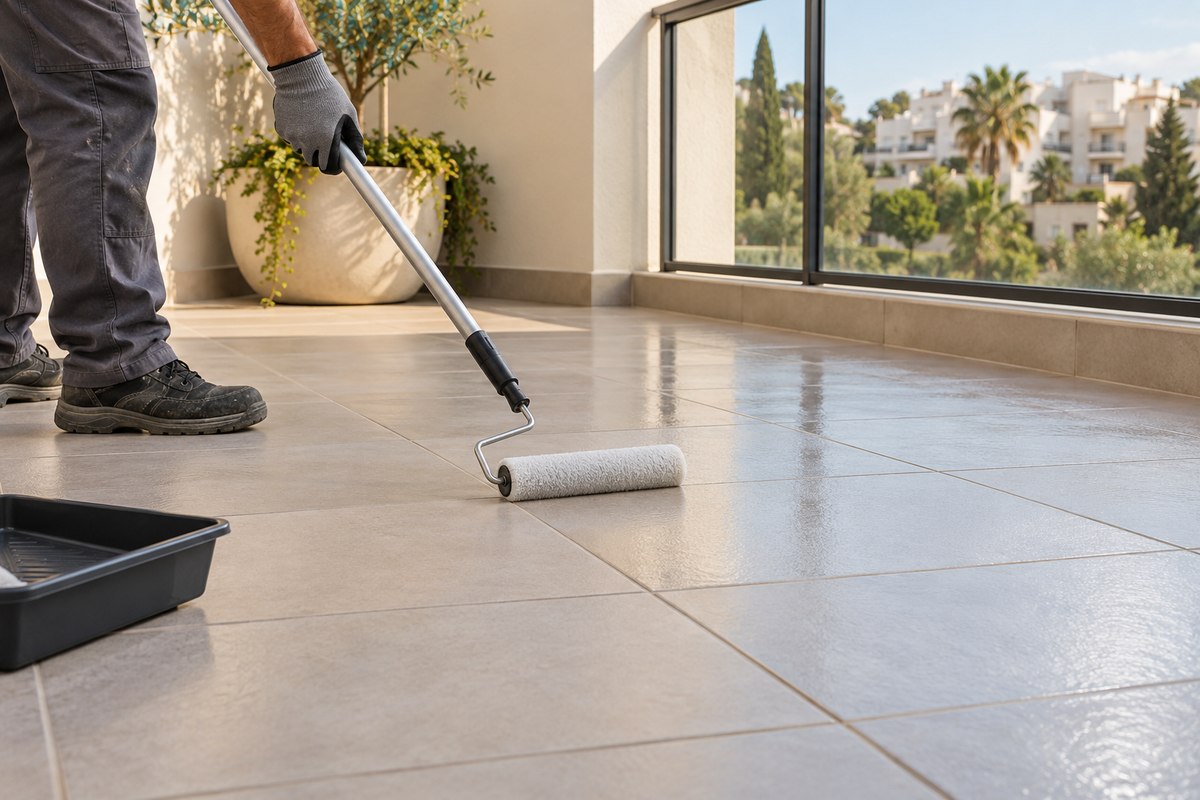
A tiled balcony is one of the areas in a home most exposed to weather damage. Strong sun, rain, temperature changes, and structural movement create cracks, wear, and damage to the waterproofing system over time. The result can be water penetration beneath the tiles, dampness in walls, paint blistering, mold, and even damage to the building's structure.
Fortunately, it's not always necessary to remove the tiles to solve the problem. Today, advanced solutions exist that allow for efficient, quick, and economical waterproofing of tiled balconies. One of the leading solutions in this field is Meritrans - a clear, high-quality waterproofing material designed to protect tiled surfaces from water penetration.
Why is professional balcony waterproofing important?
A tiled balcony is constantly exposed to sun, rain, and temperature changes, making it one of the most sensitive areas to water penetration. Even when the tiling appears intact, water can seep through the grout, joints, or tiny cracks, leading to dampness, mold, peeling paint, and damage to the building's infrastructure. Professional waterproofing done on time helps prevent costly damages, extends the life of the balcony, and keeps the building dry and protected for years.
What are the signs that your balcony needs waterproofing?
Balcony waterproofing problems usually develop gradually, so it's important to identify them as early as possible. Water penetration through the grout, joints, or cracks in the tiling can cause damage even before it's visible.
Signs of dampness inside the home
Damp stains on the ceiling or walls, peeling paint and plaster, the appearance of mold, and a persistent musty smell are typical signs that water is penetrating from the balcony into the structure and requires treatment.
Signs on the balcony itself
Cracked or crumbling grout, cracks in tiles, discoloration of the tiling, water accumulation after rain, or areas that remain damp for a long time may indicate a failure in the waterproofing system.
Why is early treatment important?
Early treatment can prevent significant damage to the structure, save expensive restoration work, and extend the life of the balcony. Periodic inspection, especially before winter, will help identify problems in time and prevent worsening.
What is Meritrans and why is it suitable for tiled balcony waterproofing?
Meritrans from MARIS is a clear polyurethane coating designed for waterproofing and protecting tiled balconies and outdoor surfaces. After application, it creates a continuous, flexible, and transparent waterproofing layer that helps prevent water penetration, while maintaining the appearance of the tiling and providing high resistance to UV radiation, moisture, and standing water. When the tiling and substrate are in good condition, Meritrans allows for improved waterproofing without the need to remove the tiles.
Meritrans is particularly suitable for tiled balconies where the tiling is stable and the source of water penetration is through the grout, joints, or surface, while the waterproofing system beneath the tiles is still functional. In these cases, effective waterproofing can be achieved without removing the tiles, saving complex renovation work and preserving the existing surface. Conversely, when there are loose tiles, structural damage, or a significant failure in the waterproofing system, professional inspection is recommended, and a more comprehensive restoration solution should be considered.
How to waterproof a balcony with Meritrans? Instructions for use
Proper application of Meritrans is one of the most important factors for the success of the waterproofing process and achieving long-lasting results. Although it is a relatively user-friendly material to apply, it is crucial to prepare the surface and work according to the manufacturer's instructions. Proper preparation of the balcony allows for the creation of a uniform and high-quality waterproofing layer on the surface. Thorough cleaning, complete drying of the tiling, and application according to the manufacturer's instructions are essential conditions for achieving optimal and long-lasting results.
Thorough cleaning of the surface
The first and most important step is a thorough cleaning of the balcony. Dust, dirt, oil stains, cleaning product residues, algae, mold, and any other factor that might impair the material's adhesion to the surface must be removed. The cleaner the tiling, the better Meritrans will be able to penetrate the areas requiring waterproofing.
Complete drying before application
After cleaning, ensure that the surface is completely dry. The presence of moisture or water within the grout or on the tile surface can impair the material's effectiveness and prevent optimal penetration into the surface layers. It is recommended to perform the work in dry weather with no risk of rain during application and drying.
Repairing defects and preparing the substrate
Before starting the waterproofing, it is important to check the condition of the balcony and address cracked grout, crumbling areas, and significant cracks. Additionally, follow the manufacturer's instructions and use the dedicated MARISEAL TILE PRIMER where required. This step helps improve the adhesion of the waterproofing system to the surface and ensures optimal performance over time.
Uniform application of Meritrans
After surface preparation, Meritrans can be applied using a roller, brush, or spray, depending on the type of surface and the manufacturer's instructions. It is important to ensure an even distribution of the material over the entire balcony area, paying special attention to joints, corners, and areas more exposed to water penetration.
Waiting for complete drying
After application, allow the material to dry and complete the hardening process according to the drying times recommended by the manufacturer. During this period, avoid exposure to water, washing, or intensive use of the balcony. Only after the material has completely dried can normal use of the surface resume, enjoying improved protection against water penetration and dampness.
Common mistakes in balcony waterproofing
Balcony waterproofing is an important investment in protecting the structure, but even the highest quality waterproofing materials will not provide the desired result if mistakes are made during the diagnosis, preparation, or maintenance process. In many cases, recurring dampness problems are not caused by the quality of the material, but by incorrect treatment of the root cause or application that does not meet professional requirements.
Treating only symptoms instead of the root cause
One of the most common mistakes is focusing on visible damage instead of the underlying cause. Many homeowners try to resolve damp stains by repainting the ceiling or wall, but this action only conceals the signs and does not prevent continued water penetration. Without addressing the source of the failure in the waterproofing system, the dampness will return and continue to cause cumulative damage.
Using a waterproofing material not suitable for the surface
Not every waterproofing material is suitable for tiled balconies exposed to sun, rain, and temperature changes. Choosing a product not designed for outdoor tiling application can lead to early waterproofing failure and the need for repeated repairs. Therefore, it is important to choose a specific material that is appropriate for the type of surface and the environmental conditions in which it operates.
Application on a damp or improperly prepared surface
Even a high-quality waterproofing material may not provide the desired results if applied to a surface that is not completely dry. Trapped moisture within the grout or beneath the tiles can impair the material's penetration and adhesion capabilities and reduce the effectiveness of the waterproofing over time. Proper surface preparation is a critical step for a successful process.
Neglecting maintenance and periodic inspections
Another common mistake is the assumption that after waterproofing, no further maintenance is needed. In reality, even a high-quality waterproofing system is affected by natural wear and prolonged exposure to outdoor conditions. Neglecting periodic inspections can lead to small cracks or localized defects developing into more significant and costly problems.
How to maintain waterproofing over time?
Regular maintenance of the balcony helps extend the life of the waterproofing system and prevent future water penetration. It is recommended to keep the surface and drainage openings clean, periodically check the condition of the grout and joints, address cracks immediately upon their appearance, and conduct a general inspection before the winter season. These simple actions, along with the use of a high-quality waterproofing material like Meritrans, will help keep the balcony dry and protected for years.


